Saturday, May 24, 2025

Food of our First Four Countries

As we arrive into the fifth country of our land travel during this adventure, I have collected enough food photos and stories to create a food-specific post. Phillip and I have eaten plenty of good food, some great food, and very few items that we would not eat again. First up, breakfast. At all of our hotels except one, we have had breakfast included.  Most of the hotel breakfasts have been just average, nothing to write about. About half the time, scrambled eggs. A few times, boiled eggs. Usually cold cuts, cheese, bread, yogurt, and machine coffee. Our very first breakfast, at a bed and breakfast, was the best. 

breakfast served in our room, Tivoli, Italy

The host owners went to the bakery early in the morning, so the croissants and pastries were deliciously fresh. Freshly squeezed juice, fruit, meat and cheese, yogurt, and good brewed coffee. 

Our first three cities to visit were in Italy, so pasta was the name of the game. 

My first (of several) dish of cacio e pepe (pasta with cheese and pepper)
Phillip was eating ravioli for his meal. Another pasta dish we ate in Tivoli was pasta with truffles. It was the best pasta dish and the most expensive (30 euros per plate). To have fresh pasta with slices of truffles harvested nearby was an experience we couldn't pass up.
We both savored this pasta with truffles.
During our visit to Bologna, I had to eat pasta with Bolognese sauce. It was quite tasty. What I noticed about it, because of the texture, was that it had been simmered for quite some time with the ground meat in it. Also, and probably because fresh tomatoes were used, it actually resembled my home-canned spaghetti sauce. Mine has a little bit more oregano and basil than this truly original "spaghetti" sauce.
Tagliatelle with Bolognese sauce in Bologna
Another specialty of Bologna is tortellini in broth, so I tried it also while in town. The tortellini were nothing special, but the broth was quite clean flavored, with just the right amount of saltiness.
plenty of tortellini were served in the broth
Our third Italian city was Trieste. It is located closest to the Balkans, so a lot of the dishes there were Balkan. By the time we got to Trieste, we were pasta-ed out, so I had my first sarma, which is stuffed cabbage. 
Big cabbage rolls go well with a really dark beer
Since we were in Europe, I scoured the convenience stores for a snack we ate when we visited Poland a few years ago, bacon-flavored (and shaped) chips. I found them when we got to Slovenia. 

In Ljubljana, Slovenia, we ate our first burek. Basic burek is cooked ground or minced beef baked in a filo pastry dough. It is a staple of the Balkans, found in every country so far. Variations of burek include cheese burek, spinach burek, potato burek, and apple burek. Yes, we've tried the basic and all the variations that we've come across. In Ljubljana, two burek vendors compete for market share: Olympio and Noble. We tried them both and Olympio, served as 1/4 of a large pie-shaped burek, was the clear flavor winner. They also had more meat in each piece. Olympio's burek was our favorite thru our journey... until Sarajevo where another restaurant's burek took the lead for flavor. 
Olympio's cheese burek on left, meat burek on right, served with drinkable yogurt
Although the name may be different in each country, beef stew is quite popular, delicious, and filling. Sometimes, it was served in the pot it may have been cooked in!
Beef stew, usually with potatoes and carrots
Our tour guide to Predjama Castle and Postojna Caves introduced us to Cockta, a truly Balkan beverage. In 1952, a Yugoslav business owner came up with the idea of producing a beverage to compete against soft drinks from abroad (particularly Coca-Cola), which were not yet being sold in Yugoslavia. A chemical engineer created the drink with a new, different taste, derived from a blend of eleven different herbs and spices including rose hips. We tried it and both love it! It's close enough to Coke that Phillip enjoys it. It's different enough (herbal-flavored) from Coke that I enjoy it. 
In addition to burek, another staple food of the Balkans is cevapi. Cevapi is unsmoked, uncased sausage, usually sold in plates of five or ten, eaten with a pita-like bread. It's like our breakfast sausages, but with completely different seasonings. Served with the cevapi and the pita bread are usually chopped onions and ajvar sauce. The red-orange paste seen in the picture below is ajvar, made of roasted red peppers and eggplant. Surpsingingly, Phillip likes ajvar. It is a condiment served with anything. It was at the breakfast buffet at the last three hotels. We both ate ajvar with our scrambled eggs. 

Especially while in Croatia, local strawberries were sold on every street corner. For 2 euro, I bought a pint of the smaller-sized berries from a vendor. They were little bundles of true strawberry flavor, the flavor I remembered from childhood, not the USA's perfect-looking but bland fruits. 
Imperfect in appearance, perfect in flavor

In Split, Croatia, we passed a storefront called Gudin Pigeria a few times before we decided to stop one afternoon. It was a butcher shop that sold pork, but it was also a restaurant that roasted and sold the pork by the kilogram, with sides. Time for us to get 500 grams (about a pound) of roasted pork belly with crispy skin and smashed potatoes with a sour cream/cream cheese like topping. 

More meat than fat on this pork belly
At our next stop, Mostar, Bosnia, our hotel was attached to a mall. Nice hotel, but mall food is not exactly authentic or usually very tasty. We walked a bit and found a small local restaurant called Uglovnica Grill. Using Google translate, I found the name means Corner Grill, not Ugly Grill. The food wasn't ugly at all. I ordered a plate with sausage and got this sausage, cased, but with the same flavor as cevapi. Very nice. French fries have been a relatively common side; however, only once have we gotten ketchup served with them.
Moving on to Sarajevo, where we spent five nights, we really hit the gold mine with traditional Bosnian food. Stuffed peppers at a small restaurant hidden down some stairs called Bosna Bistro, about 300 yards from our hotel. We went back twice more during our Sarajevo visit. Balkan peppers are not usually dark green like our bell peppers, but rather this lighter shade of yellow-green. Slightly different flavor. They were served with mashed potatoes and sour cream (and a local beer).
light tomato sauce, ground meat stuffing
A lot of vegetables are stuffed and served, not just peppers and cabbage. In central Sarajevo, we found a cafeteria-type restaurant. We could see the food and even just point at it since we didn't know the Bosnian name for it. I pointed at several items and gestured "small," so I could taste a couple dishes. I got a bowl containing okra stew with meat, two stuffed cabbages, and three stuffed onions. The stuffings were seasoned differently from each other and different from my previous stuffed peppers.  
The bread was a fluffy pita bread
Phillip got a big bowl of beef stew. I tasted it and it was lightly seasoned to allow the beef and vegetables to flavor the dish. He really enjoyed it. 
Big chunks of meat and potato in his stew
We had been eating burek once or twice in each town and hadn't found one we liked better than our first burek, at Olympio in Slovenia, until we at burek in Sarajevo. I found a burek restaurant in a neighborhood that had a high Google score. All the burek now was coiled burek, but we'd noticed a smaller ratio of meat with the pastry coil versus the pie shape. Until we went to this Sarajevo burek restaurant. Burek was the only food it served and it was great! Whereas Olympio's had a faint onion taste, these had a faint black pepper taste. It was coiled but had so much more meat and potatoes than others we'd eaten. It beat Olympio because this one was not greasy. We didn't find the restaurant until towards the end of our Sarajevo stay, but we did eat there twice. 
Phillip frequently bought gelato. A few times, I would get one, but I'm not big on sweets. One afternoon, however, I could not resist the baklava, so we stopped and got an assortment to take back to the hotel. I think we had enough sweetness to last a week with these!
An almond and two traditional on back row
front row is a chocolate baklava, a nutella one, and an unknown one
And back to snacks... we stopped seeing the bacon-flavored chips when we left Slovenia. We checked the different groceries and convenience stores in each city and haven't found them again. We did, however, find truffle potato chips that are also delicious! Truffles are harvested in the area around Tivoli and Trieste, but we didn't find these until Sarajevo.
very pronounced truffle flavor
A finally for this post, our last visit to Bosna Bistro in Sarajevo did not disappoint. Stew for Phillip and sarma (cabbage rolls) for Pat. 
No potatoes and a different flavor of stew than he ate before
 
A darker and more flavorful cabbage for this sarma
This has been a summary of the delicious foods we have eaten so far on this adventure. We've also eaten hamburgers, only once from an American chain (Burger King) because it was a rainy Sunday evening in Tivoli, all the local restaurants were closed, and we were hungry. Local hamburgers are just like American hamburgers, so no pictures of them. We ate Thai food once (authentic Thai as all the employees appeared to be from Thailand) but it was too spicy for Phillip. One of the best things about the Balkan food is that it is well seasoned but doesn't give Phillip indigestion unless he eats too late, which is our fault. We are looking forward to more delicious food!  

Friday, May 23, 2025

Strolling down an Olympic Bobsled Track and other Sarajevo Adventures

Five nights in Sarajevo, Bosnia & Herzegovina, are almost over. We enjoyed our time here and recommend the city to other travelers.  Our favorite adventure was strolling down an abandoned Olympic bobsled track. Sarajevo hosted the Winter Olympics in 1984, before the Bosnia War of the 1990s. For the Olympics, bobsled/luge tracks were built on a mountain close to the city. FYI, Bobsled and luge use the same track, but the competitors start at different parts of the track. And, in the USA we call it bobsled, Europeans call it bobsleigh. The bobsled track, now over 40 years old, is still on the side of the mountain. After the Olympics, it remained in use for competitions until the Bosnia War and the Siege of Sarajevo. During the siege, the track was used as an artillery position by Bosnian Serb forces. Unsuccessful attempts to fund a renewal of the track, which did get some damage, have occurred in the past thirty years. Now, visitors can take a cable car to the top of the mountain and visit the tracks. 

Looking back at the beginning of the cable car ride

And the city grows smaller.....
Still quite a way to go up the mountain

The city is quite small as we near the top of the mountain

The trail at the start of the walk down went under the cable car

Just after going under the cable car, the trail met the beginning of the bobsled/luge runs. The runs, made of reinforced concrete, were in remarkably good shape and curved down the mountain for over 4200 feet (8/10 mile) with a vertical drop of over 400 feet. Phillip and I walked in the runs for their entire length, about 1/3 of the mountain' slope.

Sometimes the walking path was right next to the run. We
stayed in the run as we walked down.

We weren't sure how these sections of track fit together

The banked curves were graffiti canvases


True artists who used spray paint and concrete as their medium

The final curve out of the trees, probably had a spectator area

This part curved uphill to slow and stop the competitors

We were still 2/3 of the way up the mountain when the bobsled run ended. We hopped out and found the walking track to continue down the extreme slope. The middle third of our trek wound thru trees with switchbacks and some small plateaus.
We passed war-damaged buildings

We saw sheep and goats with a shepherd.
The shepherd is sitting, in about the middle of the picture
The final third of the mountainside took us through neighborhoods, but the path, now a one-lane road, was still extremely steep. There were sections that Phillip and I could barely stay standing, probably over a 25% grade. Fortunately, it was paved. Had it been gravel, cars could not have made it up and we would have slid going down. 
Our steep trek took us right to the edge of the main central city area. Although we walked the bobsled track two days ago, our legs are still sore. The extreme downhill used muscles in a way that our previous level and uphill walking had not. And... I'm glad we had trimmed toenails, or we would have had sore toes and holes in the tops of our shoes!

Other sights we've seen in Sarajevo include the Latin Bridge and the exact location where Archduke Franz Ferdinand was assassinated, starting WWI. A replica of the car in which he and his wife were riding when they were shot was parked nearby. Phillip and I had seen the actual death car in a museum in Vienna, Austria, so it was fascinating for us to see the actual historic location, too.
The Latin Bridge, site of Franz Ferdinand assassination
Soon after our arrival in Sarajevo, Phillip and I took a two-hour walking tour to familiarize ourselves with the city and to learn a bit about the Bosnia War of the 1990s. Our tour guide told us of the history of Sarajevo as a place of harmony and tolerance and the crossroads for different cultures and religions
Note the different paving stones, Eastern (Ottoman) style on the
lighter side, Western with the darker stones
Sarajevo as a city was established by the Ottomans (from the East) in the 1400s and became part of the Silk Road (trade from East to West). By the late 1800s, the Ottoman empire was dissolving and Hapsburg rule came to Serbia. Standing on the sidewalk above, looking one direction are vendor stalls like a bazaar:

In the other direction are buildings in the style of the Hapsburgs of Vienna:
Our tour guide, to illustrate the city's historical tolerance of diversity, told stories of how, during WWII, the Muslims of Sarajevo (who were not persecuted by Hitler as he did not want to fight what was left of the Ottomans) would hide their Jewish neighbors in their homes, giving them fake Muslim names and passing them off as relatives so the Nazis would not take them away or kill them. After WWII, the local Muslim community paid to rebuild the Jewish synagogue. 
The Bosnia War, which involved several of the Balkan countries, and the Siege of Sarajevo (1992-96) was caused by tensions that developed during the dissolution of the country of Yugoslavia. Ethnic minorities were not happy with the country lines being drawn out of Yugoslavia and they ended up with the weapons from Yugoslav military. War raged in this area for several years during the 1990s, with 14,000 people killed in Sarajevo alone. 
All the gravestones we could see in this cemetery were from the early 1990s

Bullet holes are still seen on many of the buildings

The Siege of Sarajevo involved one side trying to take Sarajevo but Sarajevo being defended from within. A blockade of supplies occurred as well as snipers set up in the mountains around the city, firing down into the city. We visited two of the museums dedicated to this terrible time in Sarajevo. 
Museum display

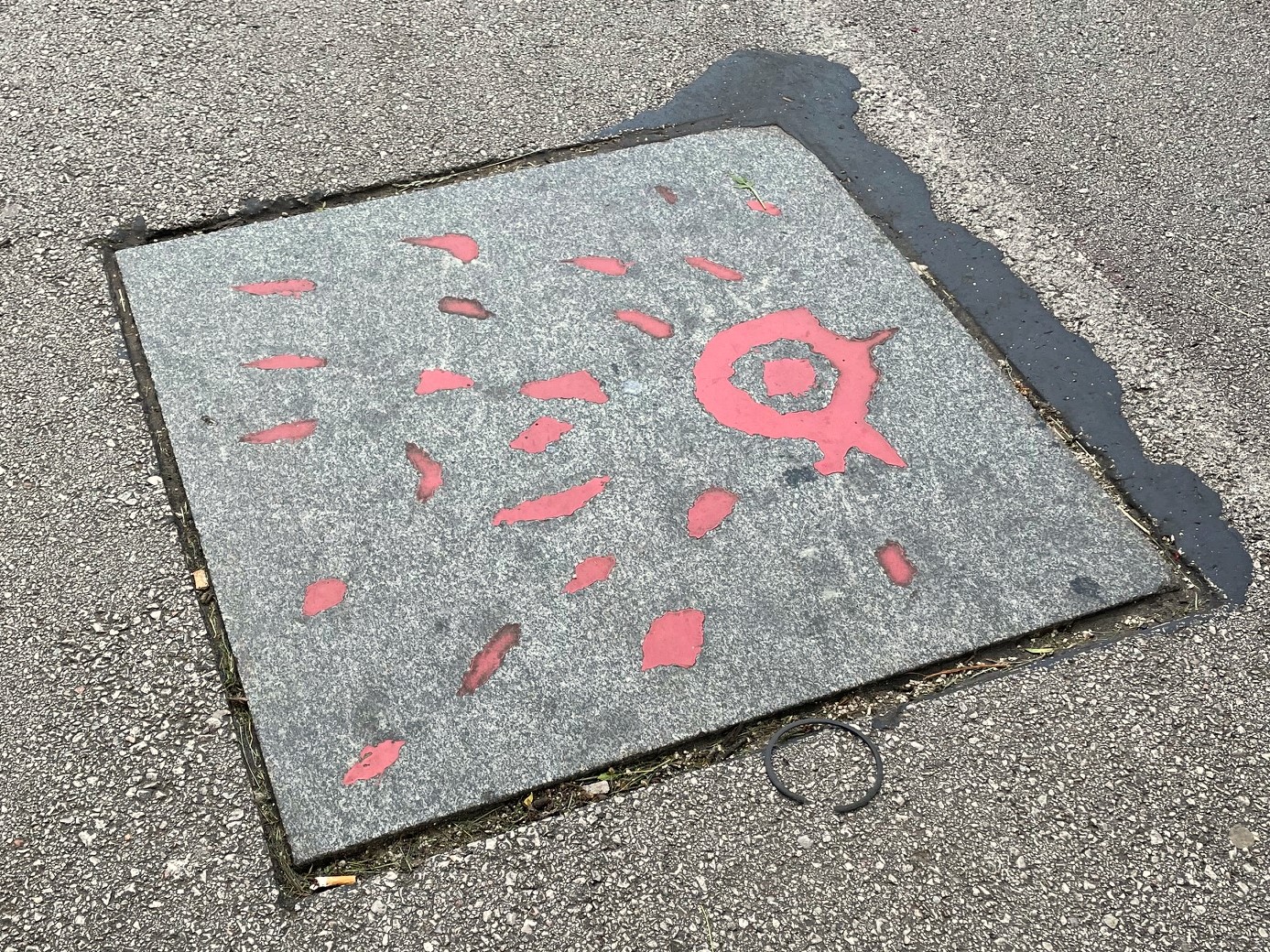
We also saw the "Roses of Sarajevo," red paint on the sidewalks to commemorate where a regular citizen had been gunned down by snipers. 
We saw these all throughout the city

Sarajevo isn't just war memories. It's a nice town with a river running thru it, with ducks and public art.

The people are friendly, and English is taught as an elective in high school. A trolley or tram ticket is about US$1 per person to go across town. Spring-like weather right now, warm some days, jacket needed on others. We enjoyed our time here. Tomorrow: a flight to Belgrade. No train and a bus would have been an eight-hour journey. 

Wednesday, May 21, 2025

Bosnia & Herzegovina travel and Mostar's Stari Most

Phillip and I are now in Bosnia & Herzegovina. We are traveling by bus because we've gotten to the part of the Balkans without train service. Our bus rides from Split to Mostar and from Mostar to Sarajevo were both about 3-1/2 hours, the perfect length for us. And the scenery on both of those trips was great.

Scenery on the trip from Split, Croatia, to Mostar
On Saturday, we had the choice of catching an early direct bus or leave at 10 am from Split and make a transfer in a Croatian town called Ploce. We chose later and had an hour layover. We stayed at the bus station and were the only people there except for a ticket agent. 
The Ploce bus station.... a very quiet location!
Our Ploce to Mostar bus crossed the Croatian/Bosnian border, our first foray on this adventure outside the Schengen Zone. The Zone consists of 29 European countries who agree to have no border control among themselves, so no passport checks or even stops at the countries' borders with each other. The bus stopped at the Croatian customs kiosk and all passengers got off the bus and presented their passports to the officer. She just looked at our passport picture and stamped the passport. Back on the bus for less than 1/4 mile and then we stopped at the Bosnia & Herzegovina immigration area. The bus driver collected our passports, the border officer looked them, and the bus driver returned them to us. No pictures of the process as it's prohibited to take photos there. 
Our two nights in Mostar were enough to see the town's damage from the Bosnian War (1992-95, ethnic conflict that rose to the level of war when Yugoslavia dissolved, 100,000 people killed) and Mostar's UNESCO World Heritage site: the Old Bridge.
Bullet holes and mortar damage on every street
Some damaged buildings are still vacant 30 years later
Numerous streams feed the main river in town, the Neretva River. 
On our way to see the Old Bridge, we came across the Crooked Bridge. It didn't look crooked to us, but it was built as a test bridge on a side channel in the 1500s, before the bridge builders invested in the Old Bridge construction. This area was part of the Ottoman Empire, and the Old Bridge had been commissioned by Suleiman the Magnificent. Construction workers did not want to disappoint the sultan. 
The Crooked Bridge, a mini-version of the Old Bridge
We arrived to visit the Old Bridge at about the same time several hundred other people arrived. 
Two men are on the outside of the rail. Local young men will collect money from the tourists to dive off the bridge into the river below. We didn't see either of these guys jump off the bridge, but we did hear the crowd cheer while we were walking on a nearby street, so at least one of them did jump.

The river just west of the bridge

The Old Bridge from about a block away
As we were leaving Mostar on Monday, we passed acres and acres of vineyards. 
Bosnian vineyards
What we enjoyed tremendously on the Mostar to Sarajevo bus were the views of the river and the rock walls of the gorge the road went through.